Four Core maps, one daily map, and every difficulty level are free. No account or card required.
How to play
How a turn works
Conquer every hex to win. Watch the one-minute video, then step through each part of it below on the same
boards.
Video
Dominex in one minute
No sound needed. Every caption is repeated step by step in the lessons below.
Watch on YouTube ↗
Lesson 1
Earn gold and take land
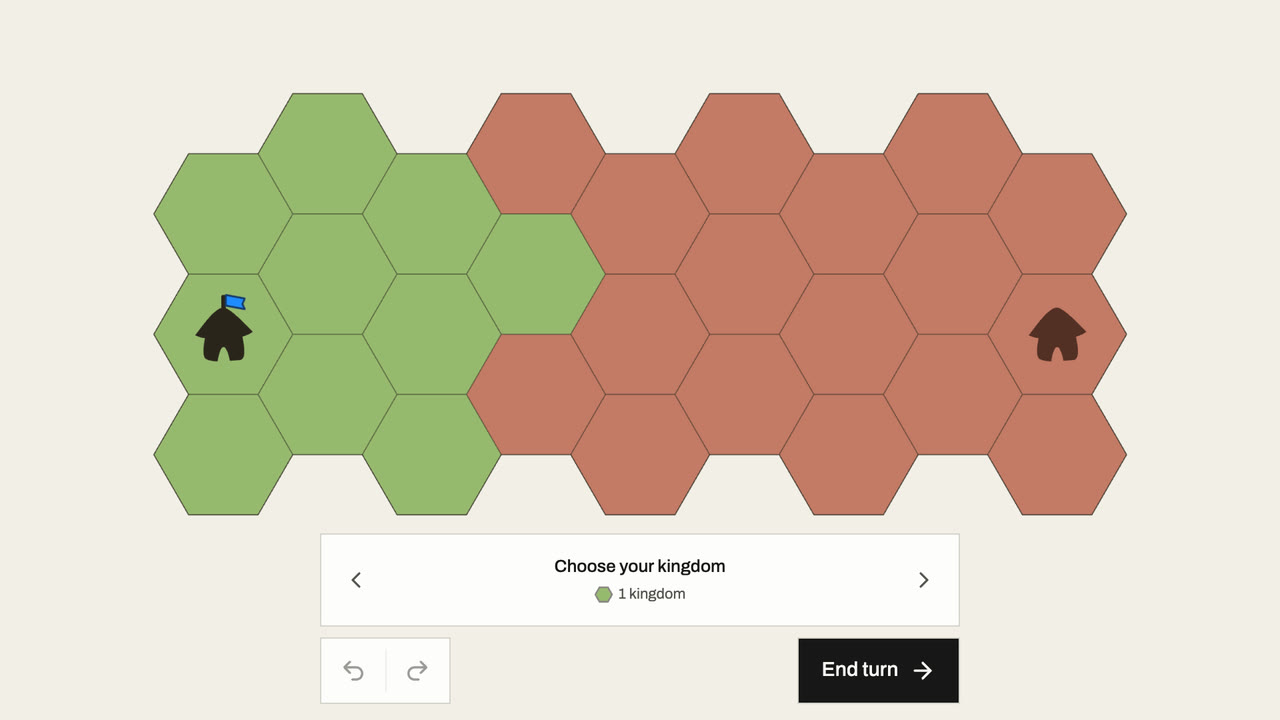
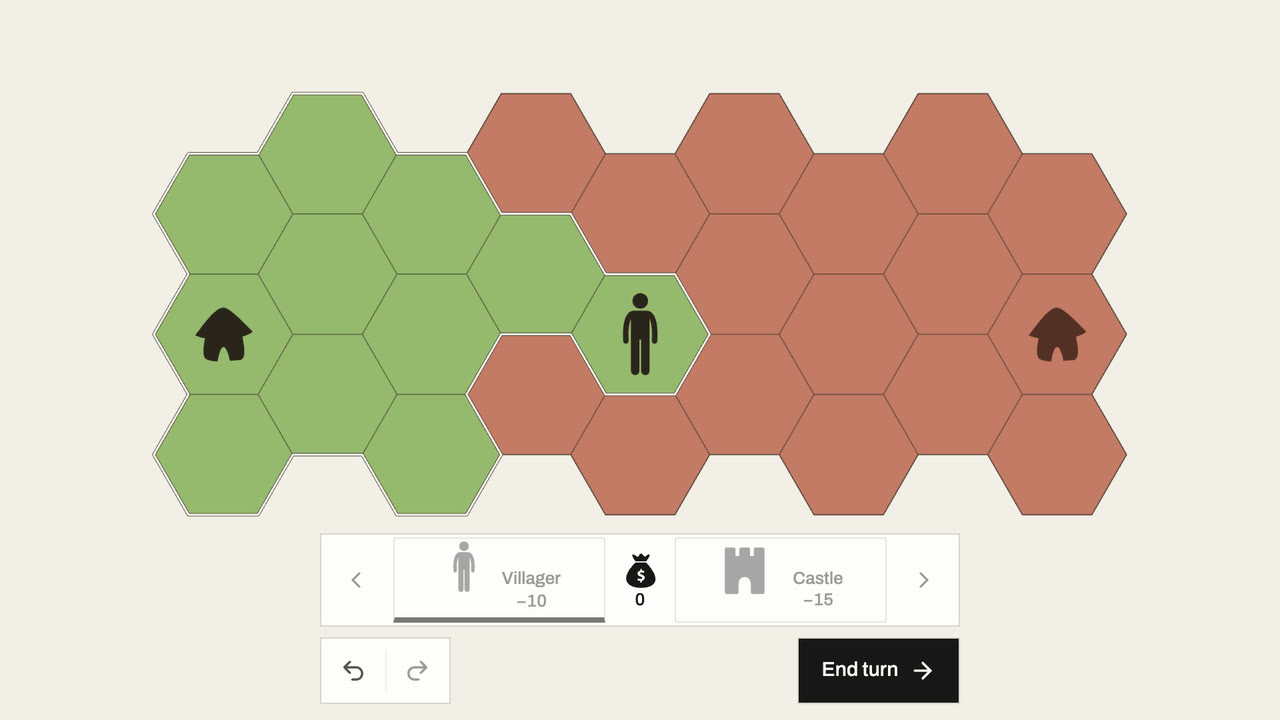
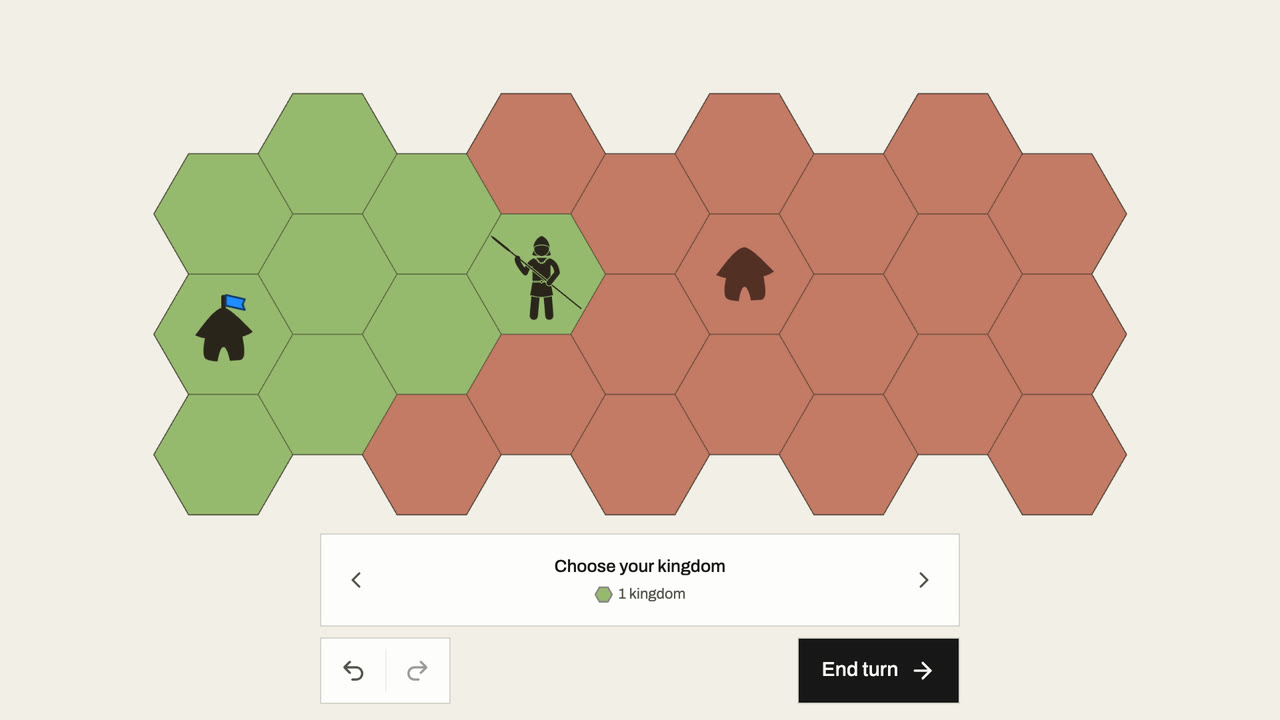
A kingdom is two or more connected hexes you own. Its capital, marked with a flag, holds the kingdom’s
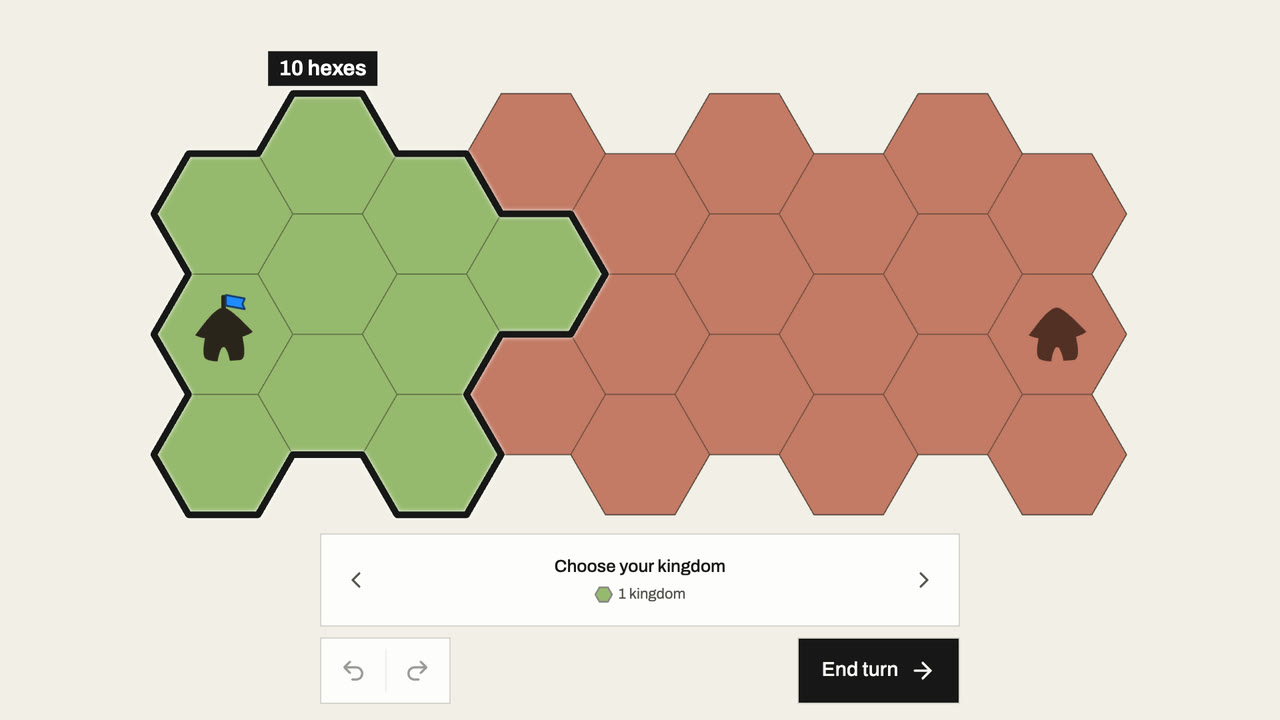
treasury. At the start of your turn, the kingdom earns 1 gold for every hex without a tree or grave.
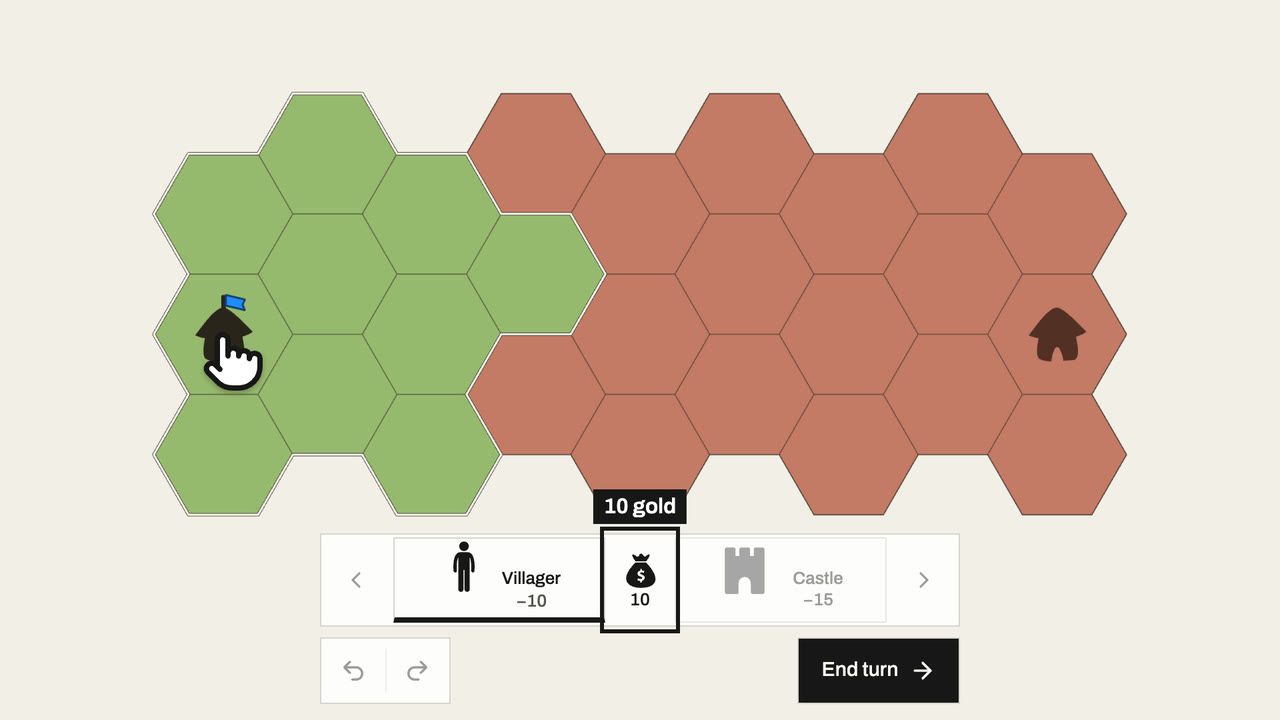
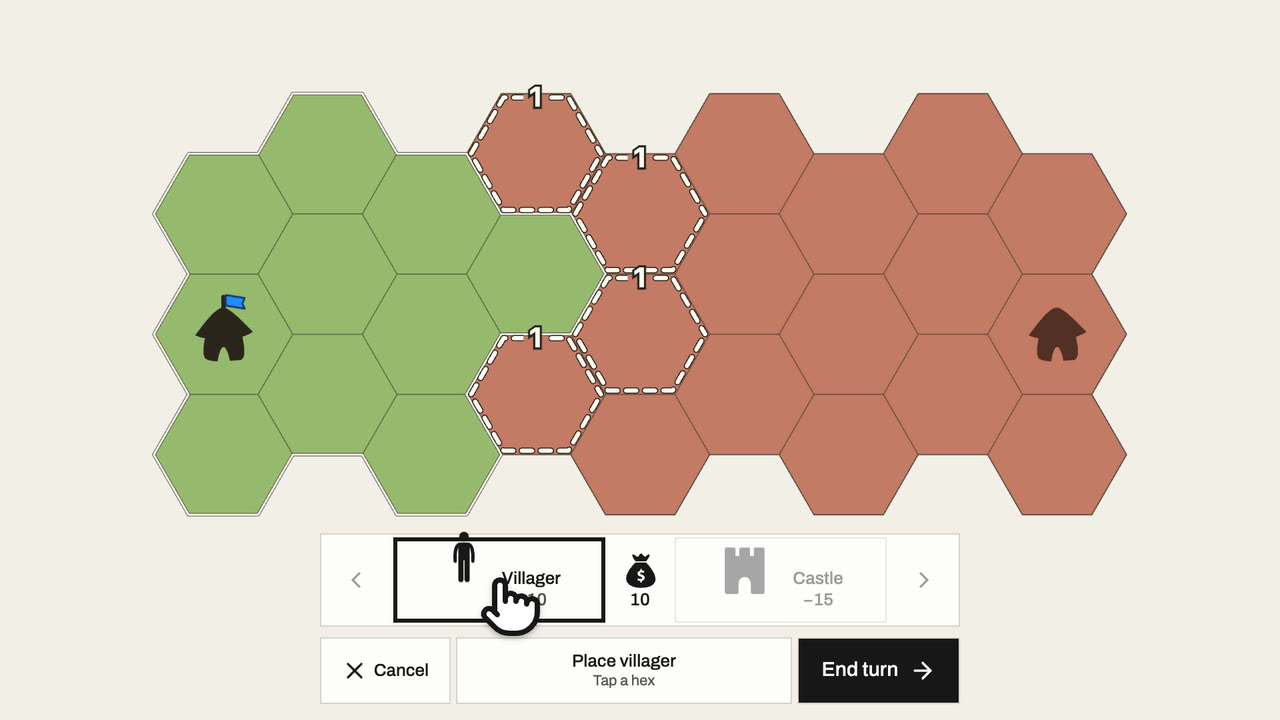
Tap the capital to spend that gold. A Villager costs 10. Place it inside the kingdom, or drop it
straight onto an undefended enemy hex along the border to take it. Units already on the board capture
the same way: select one, then an enemy hex bordering its kingdom. It doesn’t need to start next to the
target.
Each unit can capture once per turn. Moving inside its kingdom is free.
This is your kingdom.
Each hex earns 1 gold a turn.
Tap the flag to spend it.
Buy a Villager for 10 gold…
…and drop it on enemy land to take it.
Lesson 2
Every unit costs upkeep
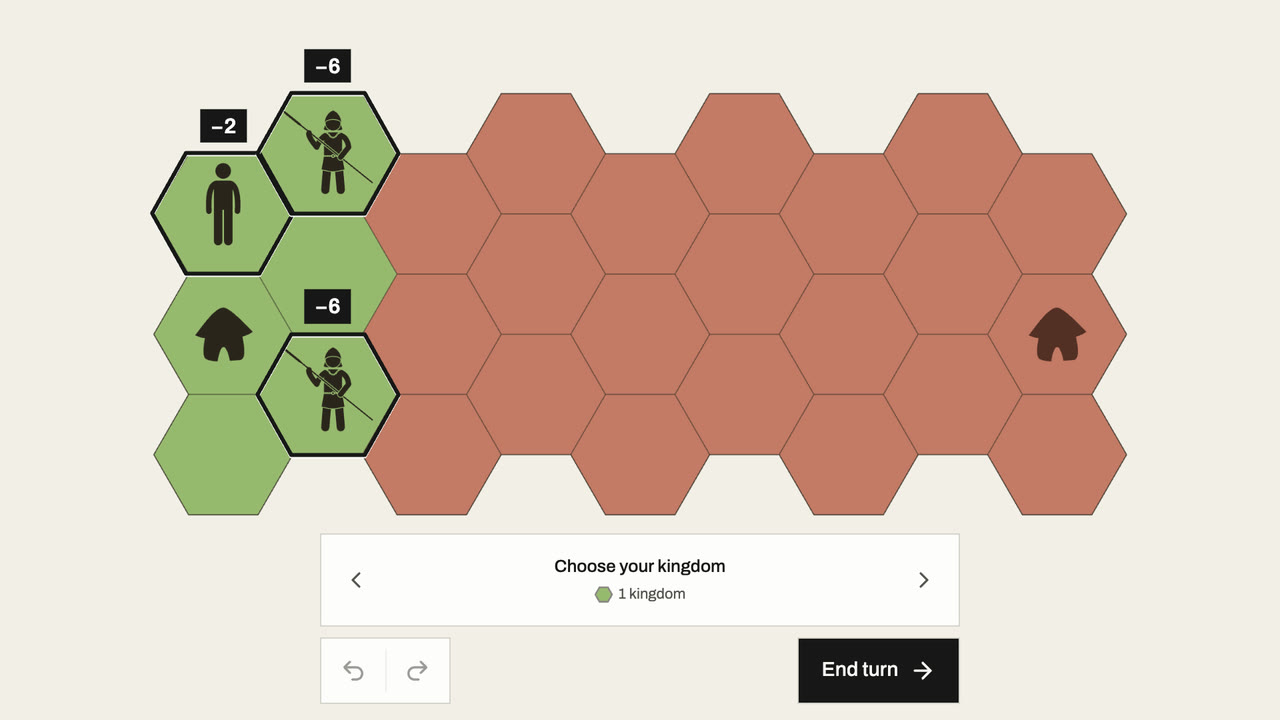
After income, each kingdom pays for its units: 2 gold a turn for a Villager, 6 for a Spearman, 18 for a
Knight, and 54 for a Baron. Castles cost nothing to keep.
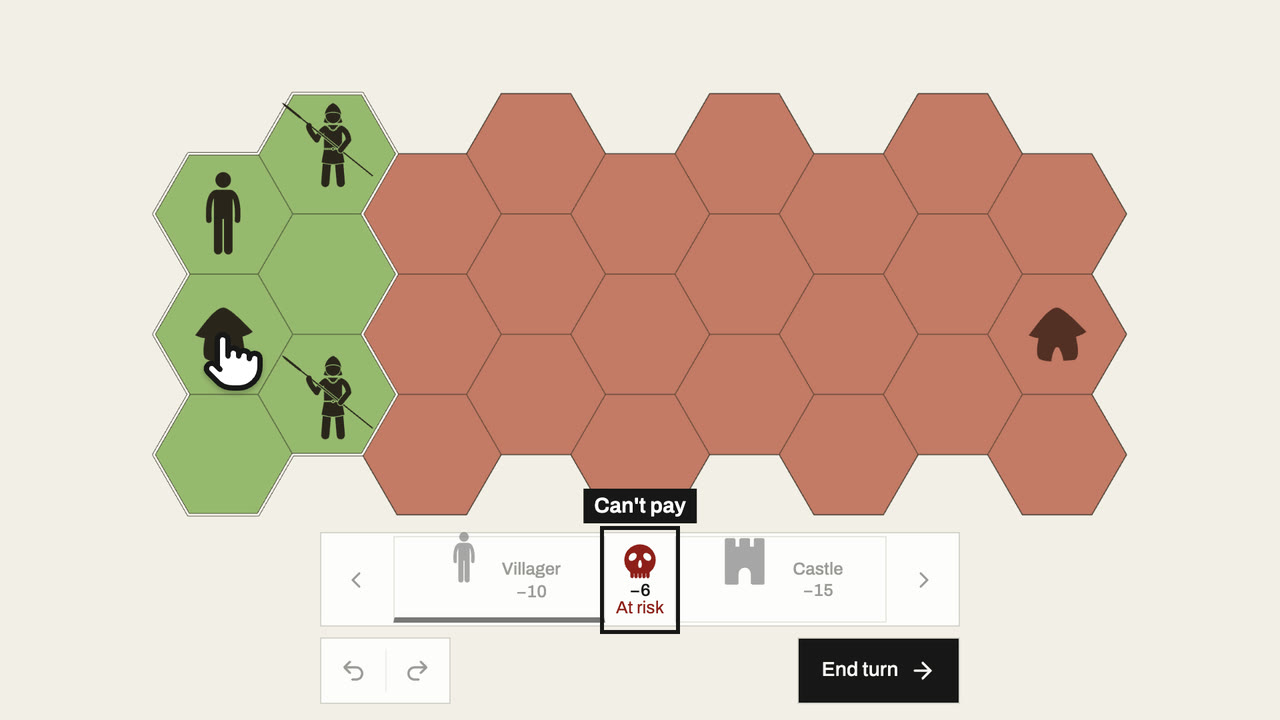
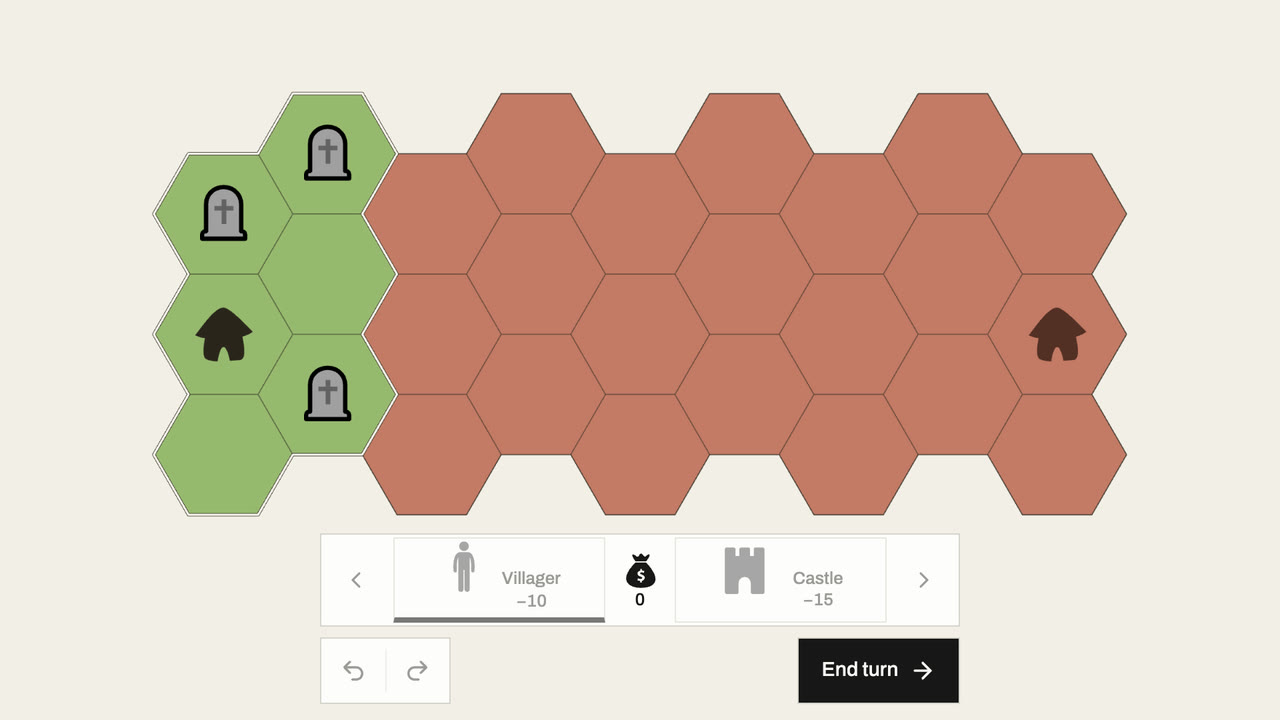
If the treasury can’t cover the bill, every unit in that kingdom dies and leaves a grave. Graves earn
nothing and grow into trees on your next turn.
Check the gold counter before you buy or upgrade. At risk means the kingdom can’t pay.
Every unit costs gold each turn.
Too few hexes to pay upkeep…
…so every unit dies.
Lesson 3
Pieces protect nearby land
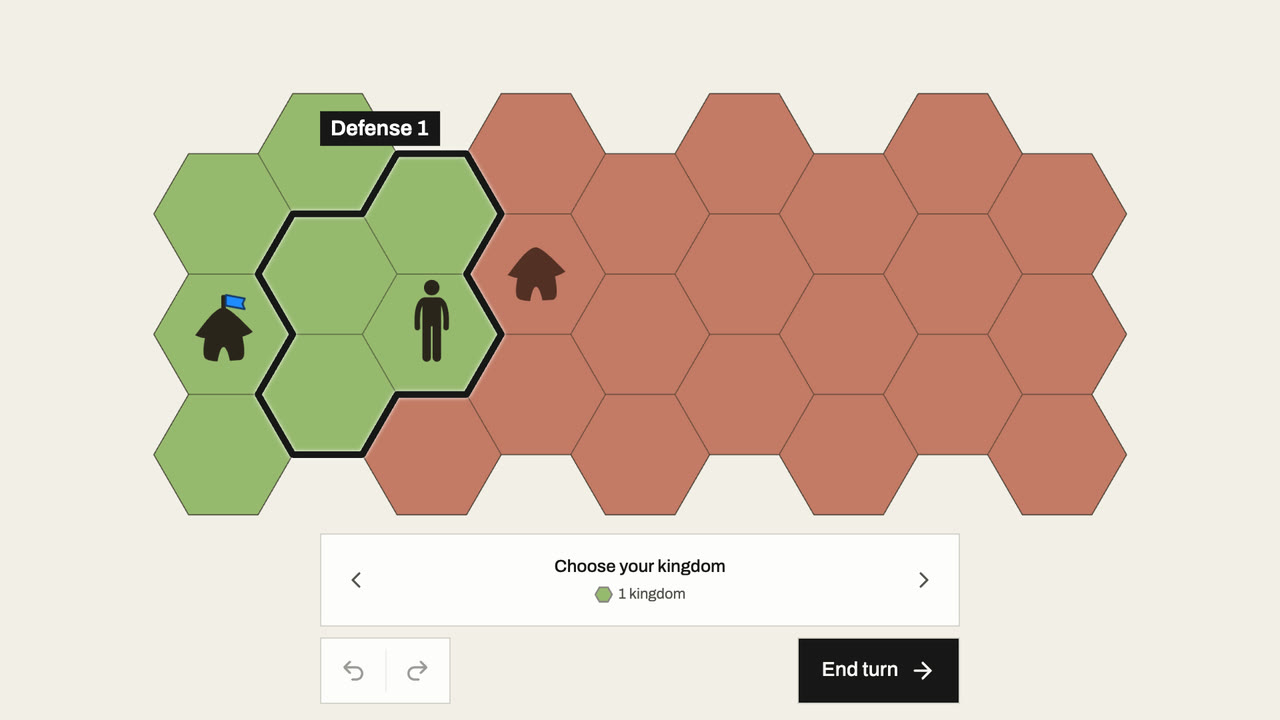
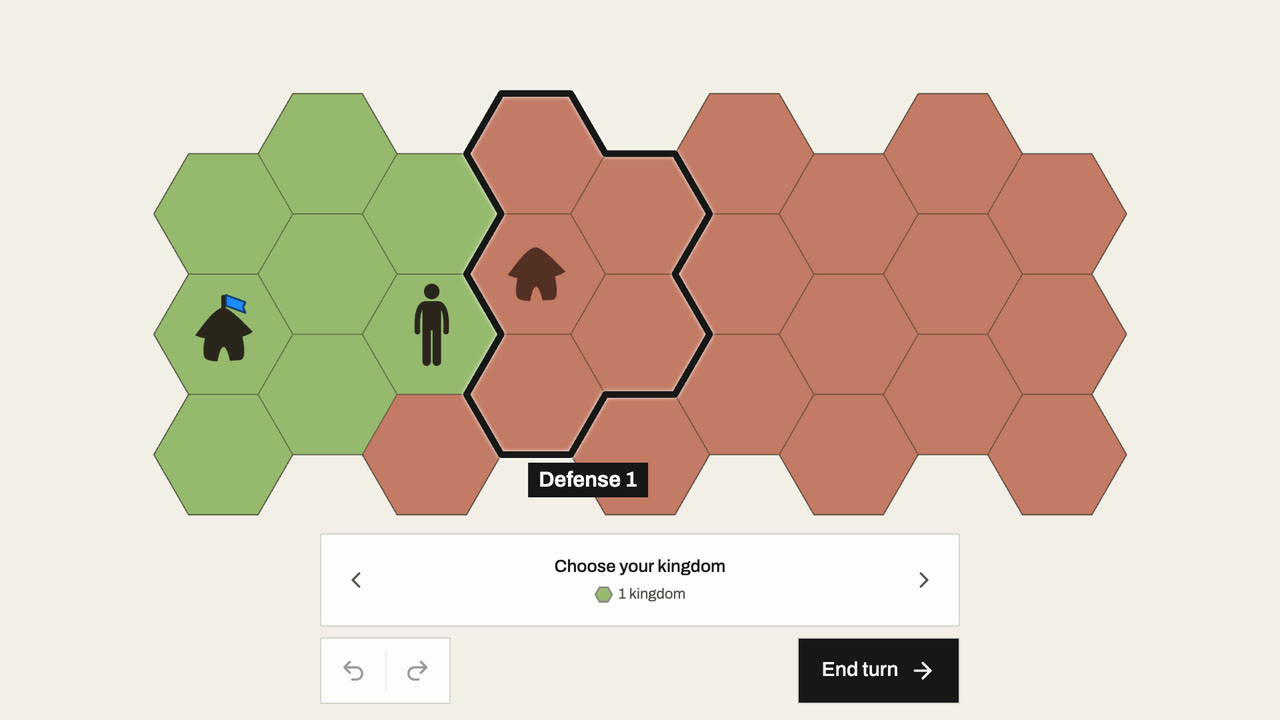
Units, capitals, and castles defend their own hex and every neighboring hex in their kingdom. A capital
defends with 1, a castle with 2, and a unit with its strength. Only the strongest defender counts.
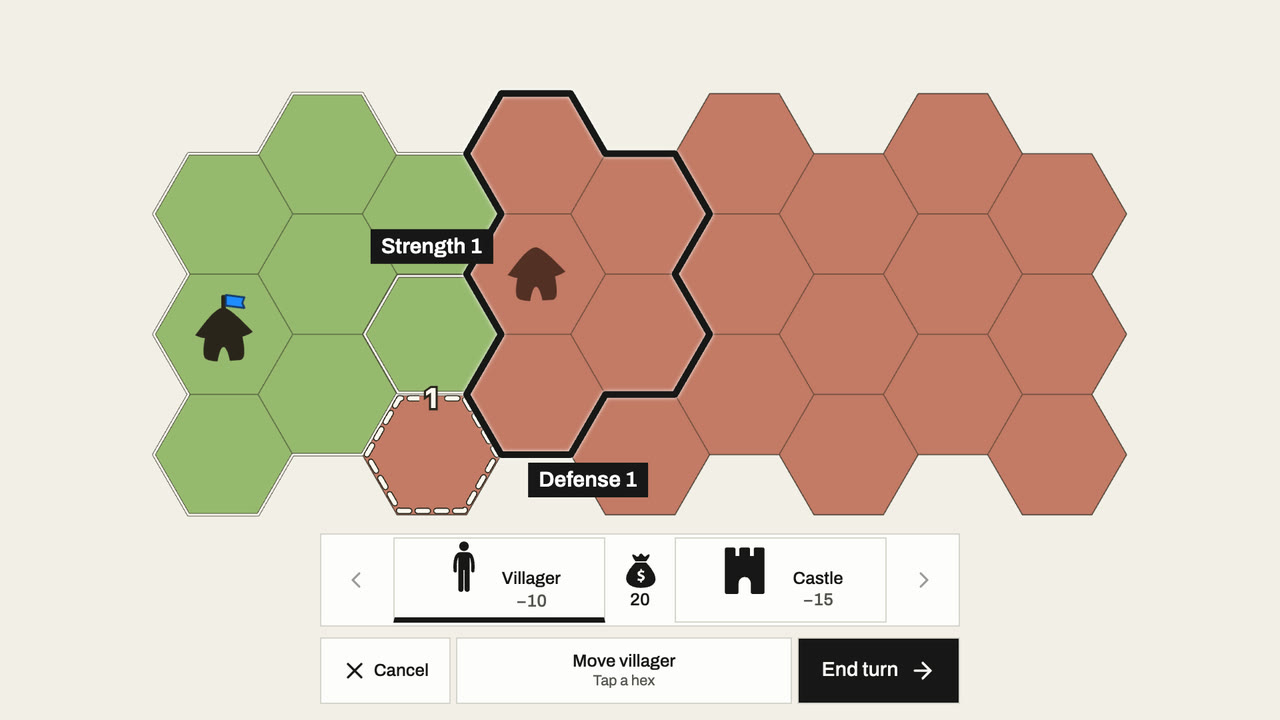
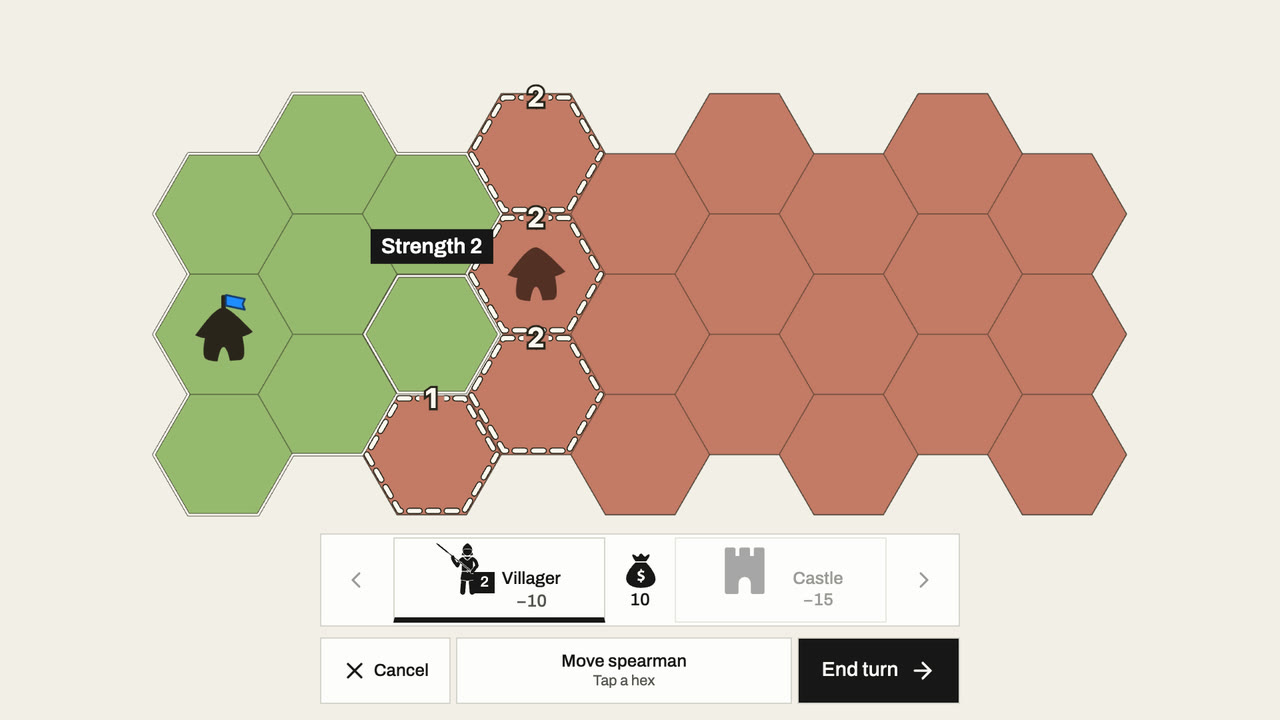
To capture a hex, your unit must be stronger than its defense. Buy a Villager onto a unit, or move two
units together, to combine their strength up to 4: Spearman 2, Knight 3, Baron 4.
Equal strength is not enough. The attacker must be stronger.
Units defend the hexes around them.
So do capitals.
Strength 1 can’t beat Defense 1.
Upgrade it to a Spearman.
Strength 2 beats Defense 1.
Lesson 4
Join kingdoms to pool gold
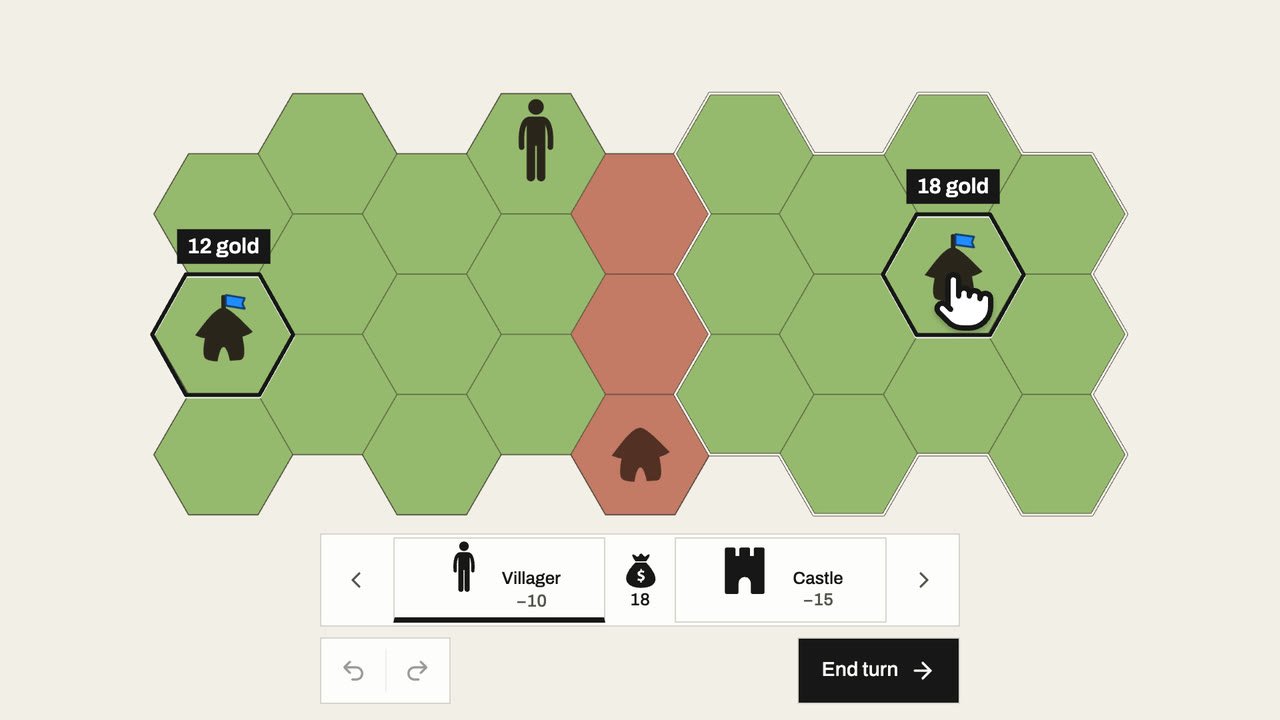
Each kingdom keeps its own treasury, so gold in one can’t pay for units in another. Capture the land
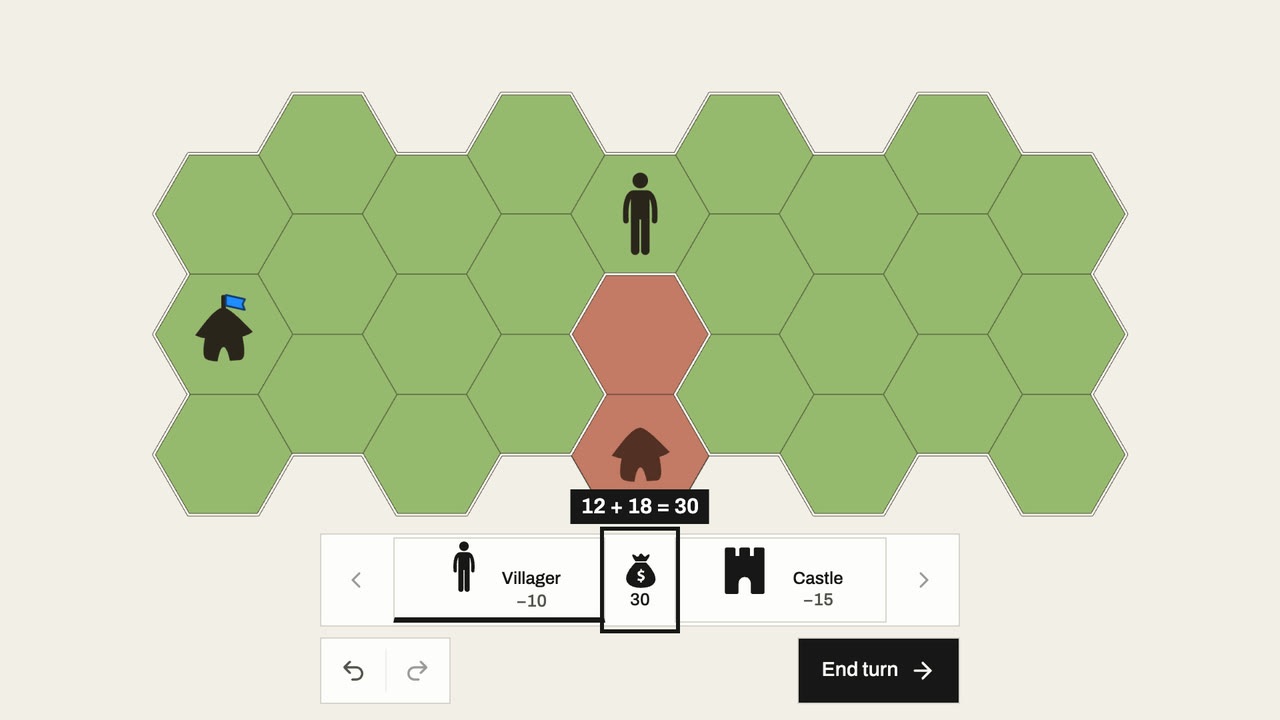
between two of your kingdoms and they become one: the treasuries combine, and the capital of the kingdom
that made the capture remains.
It works against you too. Cut an enemy kingdom in two and only the side with its old capital keeps the
gold. The other side starts from nothing, and may not be able to pay its units.
Connect your kingdoms. Split your rivals’.
Two kingdoms, two treasuries.
Join them to pool the gold.
Putting it together
Your turn, in order
1
Collect and payTrees spread, units are ready again, and each kingdom collects 1 gold per hex without a tree or
grave, then pays upkeep. A kingdom that cannot pay loses every unit to graves.
2
Act, in any orderBuy units and castles, move and combine units, and capture bordering land. Undo and redo until you
end the turn.
3
End turnYour five computer rivals take their turns, then yours begins again.
Keep nearby
Quick reference
Piece
Strength
Cost
Upkeep
Villager
1
10
2
Spearman
2
20
6
Knight
3
30
18
Baron
4
40
54
Capital
1
—
—
Castle
2
15
None
Each added Villager costs 10 gold. Unit costs show the total from scratch.
Unit actions
A unit can capture, chop a tree, or clear a grave once per turn. Moving inside its kingdom does not
use its action.
Combining
Move friendly units together, or buy a Villager onto one, to add their strength up to 4. The result
can act only if both were unused.
Trees and graves
Trees earn nothing. Bankruptcy turns units into graves, which become trees on that player’s next
turn.
Winning
Win when no rival has a kingdom, you hold every land hex, or you accept a surrender offer after
holding more than three-quarters of the land. A lone hex isn’t a kingdom and doesn’t keep a player
in the game.
Difficulty
Every level uses the same computer player. Its estimated attack allowance rises from roughly ¼ on
Casual to no limit on Legend.
Controls
Drag to pan and pinch to zoom. On a computer, use the mouse, scroll wheel, or keyboard.
The same rules are in the app under Help and work offline.